

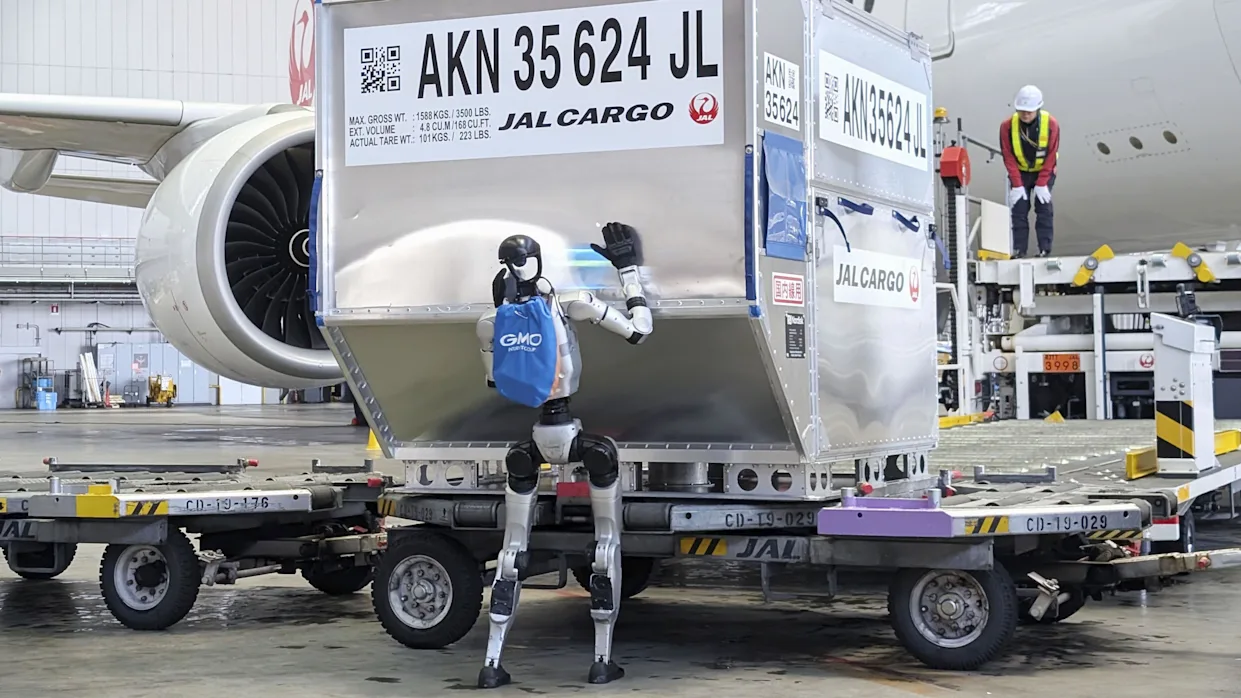
What if your luggage at the airport was handled not by a person—but by a robot? That future is quietly rolling out at Japan Airlines.
Starting May, JAL will begin a two-year trial using humanoid robots at Haneda Airport.
The plan? Put these machines to work loading and unloading cargo—jobs that are physically demanding and increasingly hard to fill.
Why the shift? Japan’s aviation sector is feeling the squeeze.
A surge in tourism—over seven million visitors in just two months—combined with a shrinking workforce has created a serious labour gap.
As Tomohiro Uchida put it, airports may look automated, but behind the scenes, “operations still rely heavily on human labour.”
Robots Support Airport Operations
And the robots? They’re just getting started. JAL hopes they’ll soon clean cabins and even handle ground support equipment.
But don’t expect humans to disappear entirely. “Some duties, including safety management, can only be handled by humans,” noted Yoshiteru Suzuki.
So, are robots taking over airports? Not quite. But they are stepping in where it counts—lifting the heavy load, literally.
In the end, the real story isn’t robots replacing people. It’s robots helping people keep the system moving.