

What starts as a routine commute can turn into a life-or-death moment in seconds—so what really went wrong near Bekasi Timur station?
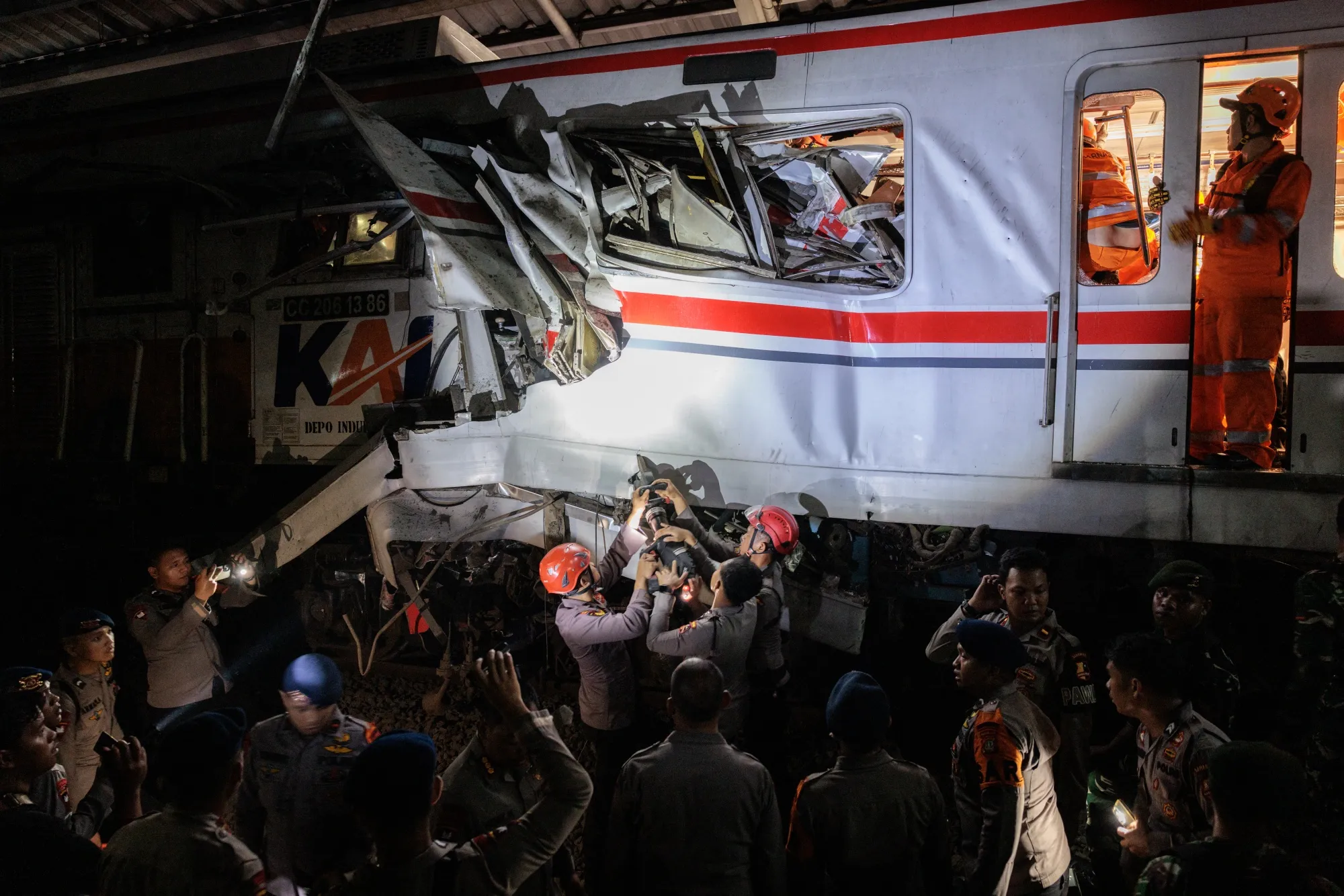
A long-distance train slammed into a stationary commuter train overnight, killing 14 people and injuring dozens.
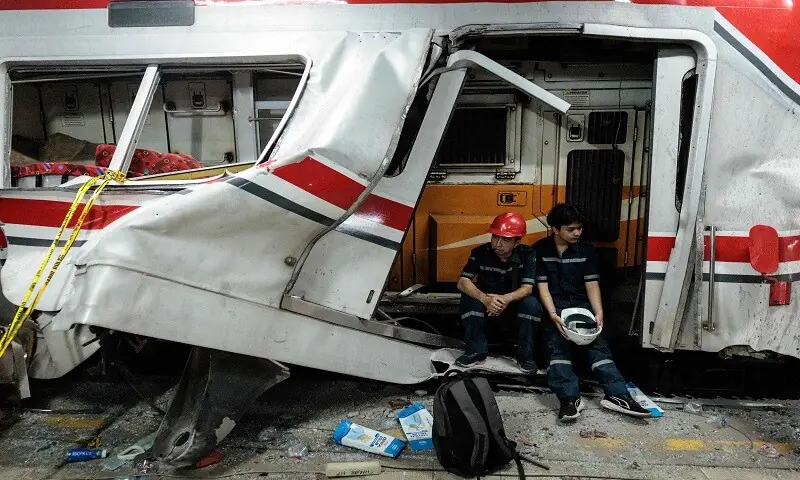
The crash left twisted metal, shattered carriages, and survivors clinging to life.
Rescue teams worked for nearly 12 hours, prying open wreckage in a desperate search for anyone still trapped.
For 29-year-old Sausan Sarifah, the nightmare is still vivid. “I thought I was going to die,” she said from her hospital bed.
One moment, passengers were preparing to step off.
The next? “A loud sound… and everyone was crushed together.” She feared suffocation in the chaos.
How Did It Happen?
Officials believe a taxi clipped the commuter train at a crossing, forcing it to stop—right in the path of the oncoming train.
President Prabowo Subianto has ordered an immediate investigation, admitting many crossings remain unguarded.
“We must fix this,” he said, calling for overpasses and better safety systems.
Experts have long warned about infrastructure gaps in Indonesia’s transport network.
When maintenance lags, small errors can turn catastrophic.
And that raises an uncomfortable question: how many warnings does it take before safety stops being an afterthought—and becomes a priority?