
What happens when politics, religion, and AI collide in one viral post?
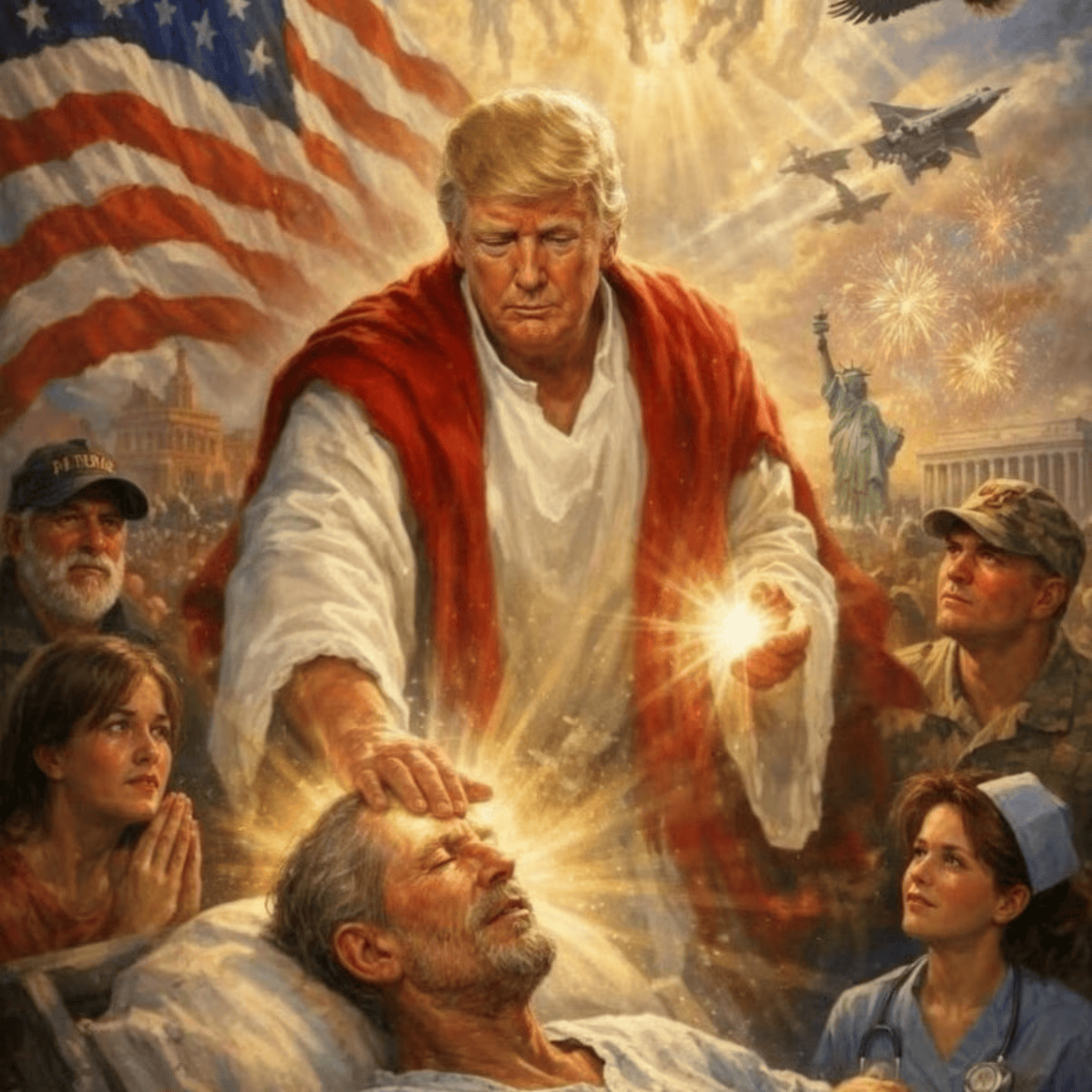
That’s the question Washington found itself asking after US President Donald Trump shared — then deleted — an AI-generated image of himself portrayed in a Jesus-like pose.
The post, published on Truth Social, showed Trump in flowing white robes, a glowing aura around him, and a healing gesture directed at a sick figure.
Harmless symbolism or something more loaded? Critics didn’t hesitate.
Even some conservative voices called it “blasphemous,” while religious commentators saw echoes of classic Christian iconography.
Trump, however, pushed back. He claimed it was simply meant to depict him as a doctor helping people.
“It’s supposed to be me as a doctor making people better,” he told reporters, insisting there was no religious intent behind it.
But experts weren’t convinced. One art historian described the imagery as deeply rooted in “Christian traditions of divine healing,”.
Pointing to the glowing light and composition as symbols historically reserved for sacred figures.
Religious Imagery Debate
So was it accidental symbolism — or deliberate messaging?
The timing made it even more controversial, coming amid Trump’s escalating feud with Pope Leo over the Iran war.
Where the pope has criticized global powers for “neocolonial” violence.
Some Republicans called the post “gross blasphemy,” while others defended it as satire gone misunderstood.
As one analyst put it, “This isn’t just about an image — it’s about the boundaries of faith in political branding.”
And maybe the real question is this: when leaders start borrowing divine imagery, who exactly is being elevated — the message, or the messenger?