

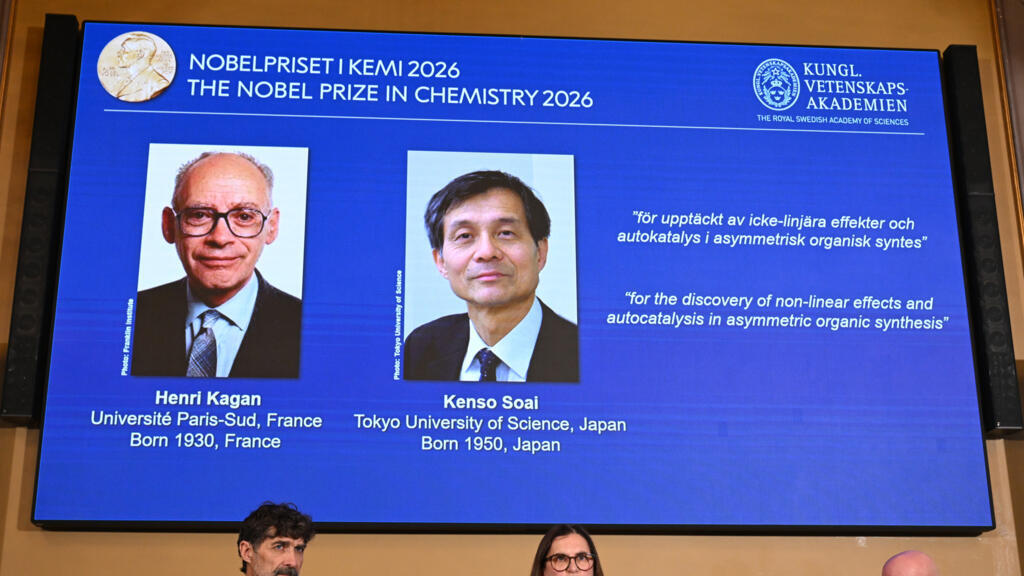
France’s Henri Kagan and Japan’s Kenso Soai have won the Nobel Prize in Chemistry for solving a century-old puzzle about how molecules choose their “handedness”.
A discovery with major implications for medicine.
Molecules such as amino acids can exist in two mirror-image forms, much like left and right hands.
Yet proteins in our bodies use only one version. Why? That mystery has puzzled scientists for generations.
The Nobel Committee says Kagan and Soai helped explain how this one-sided pattern, known as “homochirality”, can emerge naturally.
But why does it matter? Because choosing the wrong molecular version can have serious consequences.
Safer Medicines Through Chemistry
The Nobel Academy pointed to the thalidomide disaster of the late 1950s and early 1960s.
When one mirror-image form was linked to severe birth defects.
Chemistry World editor Phillip Broadwith said their work reaches “the very fundamental level of understanding how we can control which ‘hand’ of a molecule we make”.
That control is vital for producing drugs, flavours and fragrances.
Kagan, now 95, developed a method in the 1980s for producing more of one molecular form than the other.
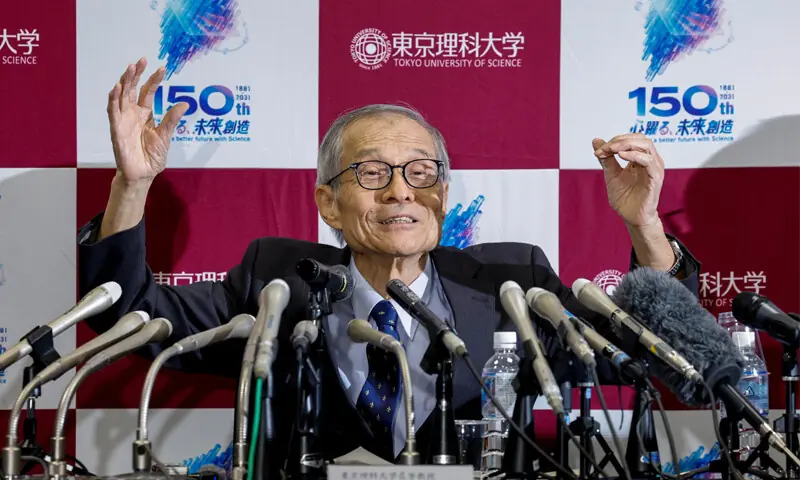
Soai, 76, said he was “extremely happy” to share the honour.
From mirror-image molecules to safer medicines, their work shows that in chemistry, sometimes the smallest twist can make the biggest difference.