

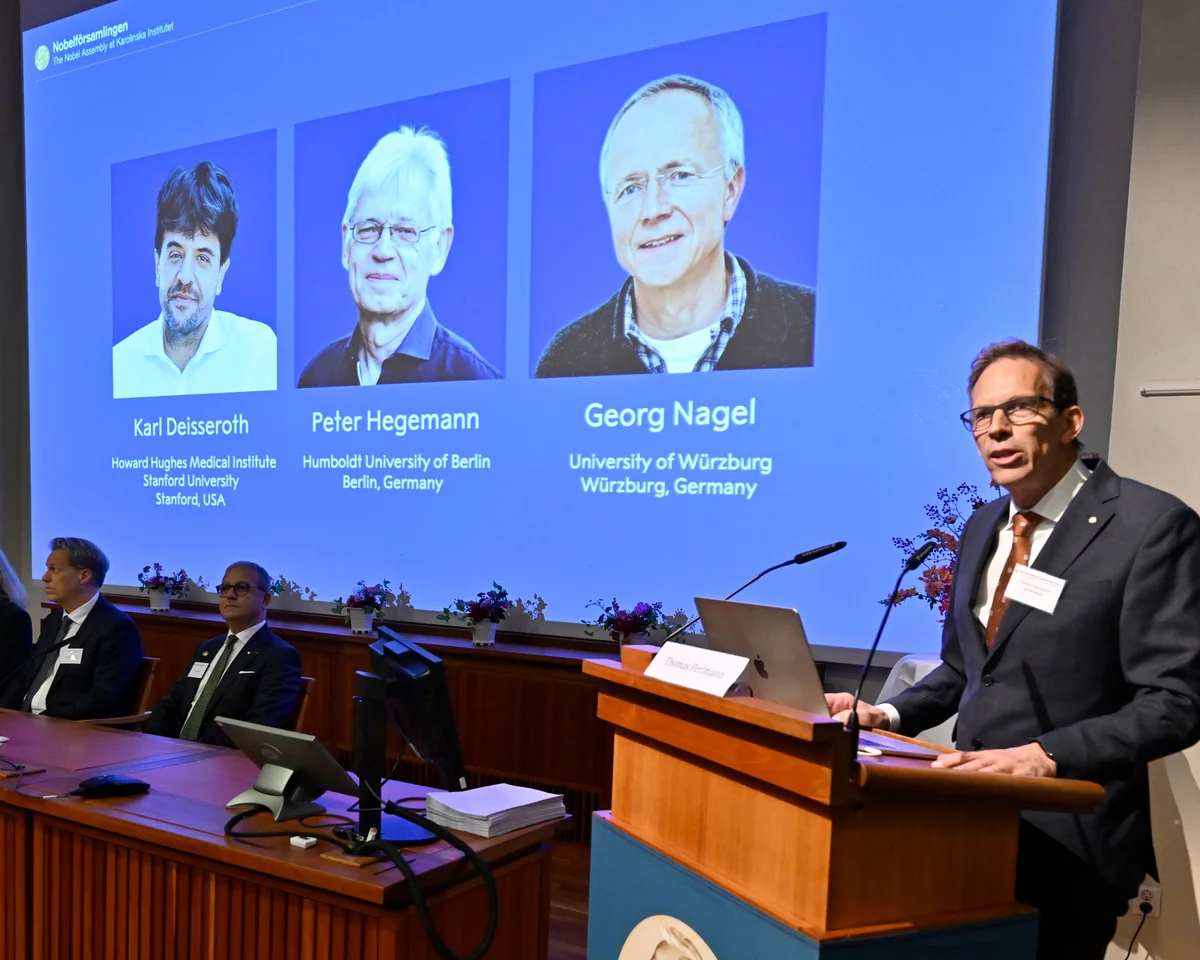
Three scientists have won the 2026 Nobel Prize in Physiology or Medicine for discoveries that transformed how researchers can study the brain.
Karl Deisseroth of Stanford University, Peter Hegemann of Humboldt University and Georg Nagel of the University of Würzburg were honoured.
They were honoured for their work on “light-gated ion channels and optogenetics”. But what does that mean in everyday terms?
Their research helped create a biological light switch that can turn nerve cells on or off.
Hegemann and Nagel discovered proteins called channelrhodopsins, which allow charged particles to enter cells when exposed to light.
Deisseroth later used the technique in animals to control specific brain cells with light.
That gave scientists something remarkably precise: a way to identify which neurons influence movement, memories, fear and behaviour.
Brain Science Advances
“This is truly wonderful news,” said Prof Botond Roska, who helped lead a study using the technology to partially restore sight in a blind patient.
The possibilities go beyond vision. Anna Wedell of the Karolinska Institute said the technique can reveal “cause-and-effect relationships”.
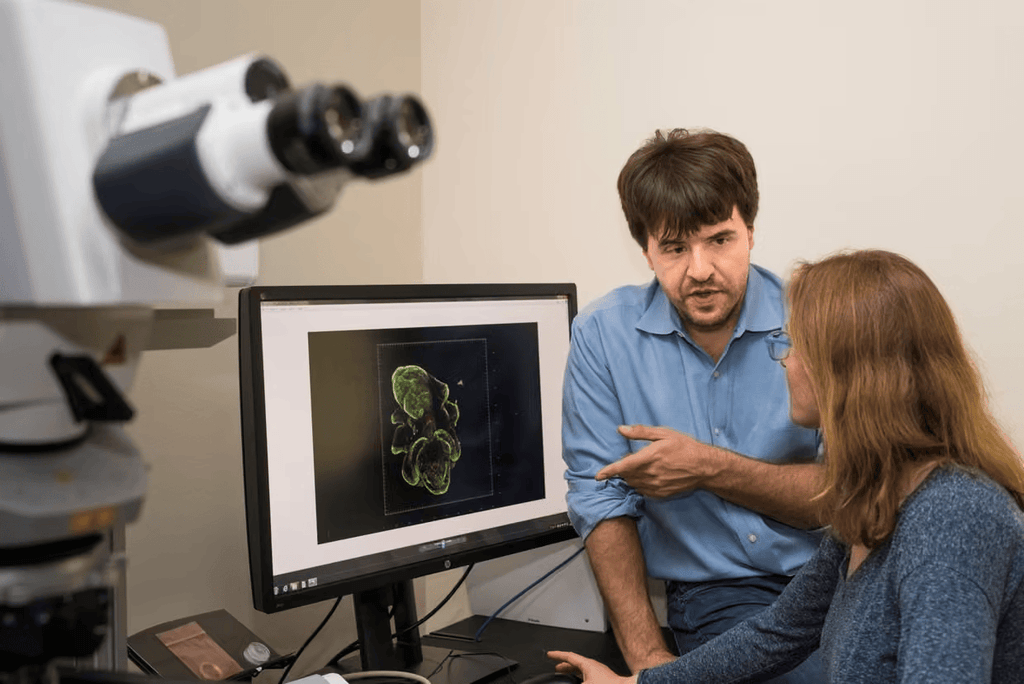
It can help pinpoint which brain cells produce behaviours, emotions and memories.
Could this eventually transform treatments for epilepsy, dementia or addiction?
The Nobel committee clearly thinks the switch these scientists discovered may illuminate far more than the brain’s mysteries.