
What do you get when the world’s two biggest powers sit down for dinner while tensions rise in the Strait of Hormuz? Diplomacy with a side of uncertainty.
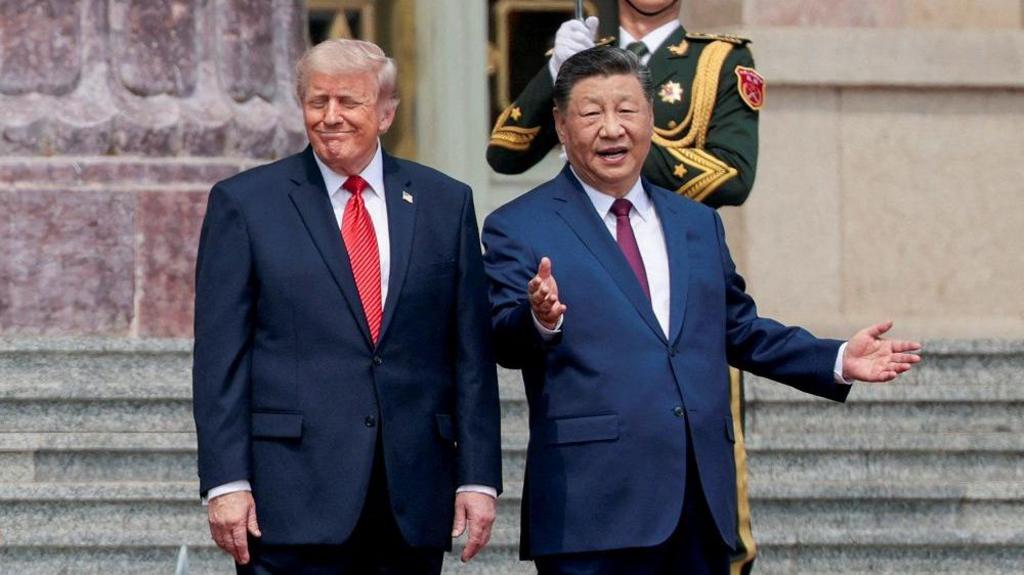
US President Donald Trump and Chinese President Xi Jinping met in Beijing on Thursday for high-stakes talks.
Touching everything from Iran and Taiwan to trade and rare earth minerals.
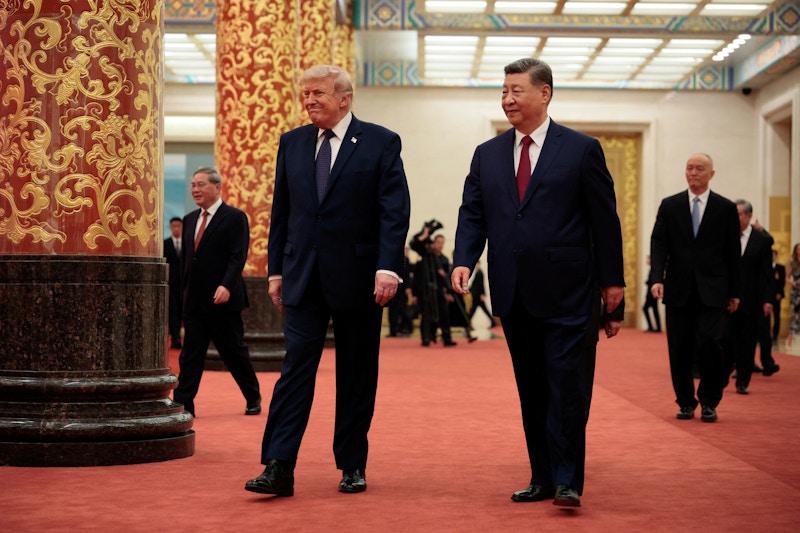
Later, the two leaders headed to a lavish state banquet inside Beijing’s historic Great Hall of the People.
A setting designed as much for symbolism as negotiation.
Xi called the visit “historic” and said China’s “rejuvenation” could align with Trump’s “Make America Great Again” vision.
“China and the US should become partners, not rivals,” he told guests.
Trump, unusually restrained and tightly scripted, returned the compliments.
Calling Xi “my friend,” he described the talks as “extremely positive and constructive” and even invited the Chinese leader to visit the US in September.
But behind the polished speeches, pressure points remain everywhere.
High Stakes Diplomacy
Xi reportedly warned that mishandling Taiwan could spark conflict, while both sides also discussed the growing Iran crisis.
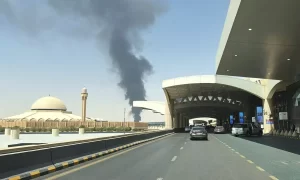
Fresh attacks on ships near the Strait of Hormuz were reported just hours earlier, raising fears over global trade and energy supplies.
US Treasury Secretary Scott Bessent said reopening Hormuz was “in China’s best interests,” hinting Beijing could quietly push Tehran toward de-escalation.
And yes, diplomacy came with fine dining too — Huaiyang cuisine, famous for delicate flavours and elegant presentation.
Because in global politics, sometimes the menu matters almost as much as the meeting.