

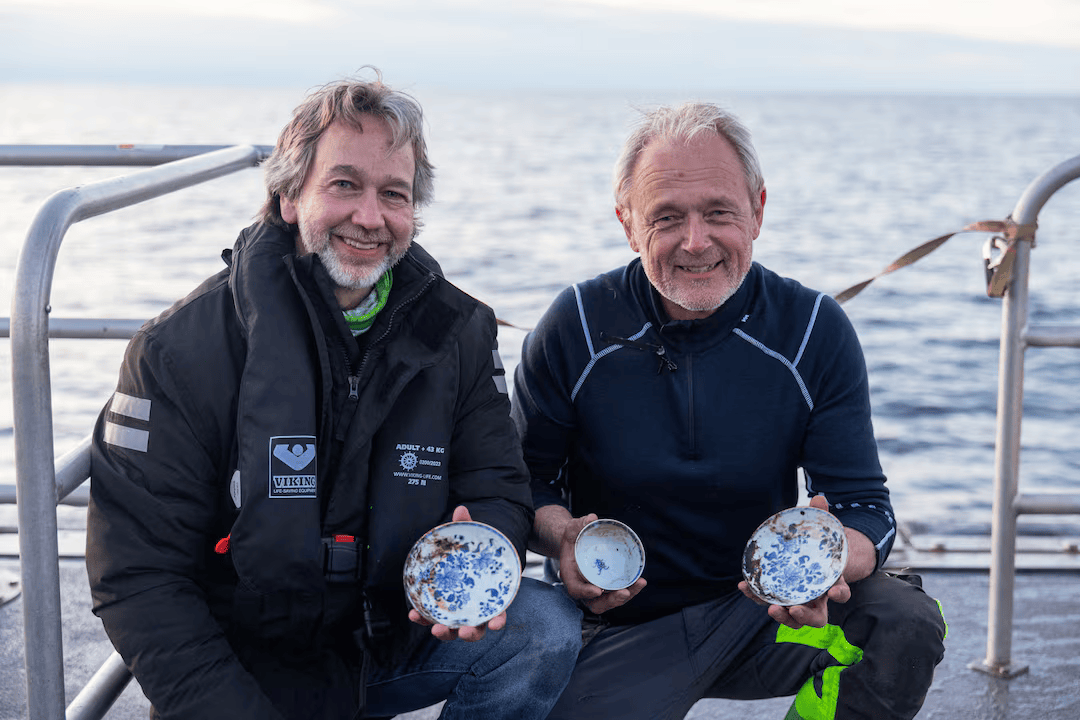
What stories can a shipwreck tell after spending nearly 300 years at the bottom of the sea?
Off the coast of Norway, archaeologists may have just uncovered a remarkable chapter of global trade hidden beneath the waves.
Researchers have recovered a treasure trove of cargo from a newly discovered 18th-century shipwreck.
It is lying around 600 metres below the surface in the Skagerrak Strait.
Among the finds were neatly stacked blue-and-white Chinese porcelain bowls, elegant goblets, textiles, grain, and even pieces of chandeliers.
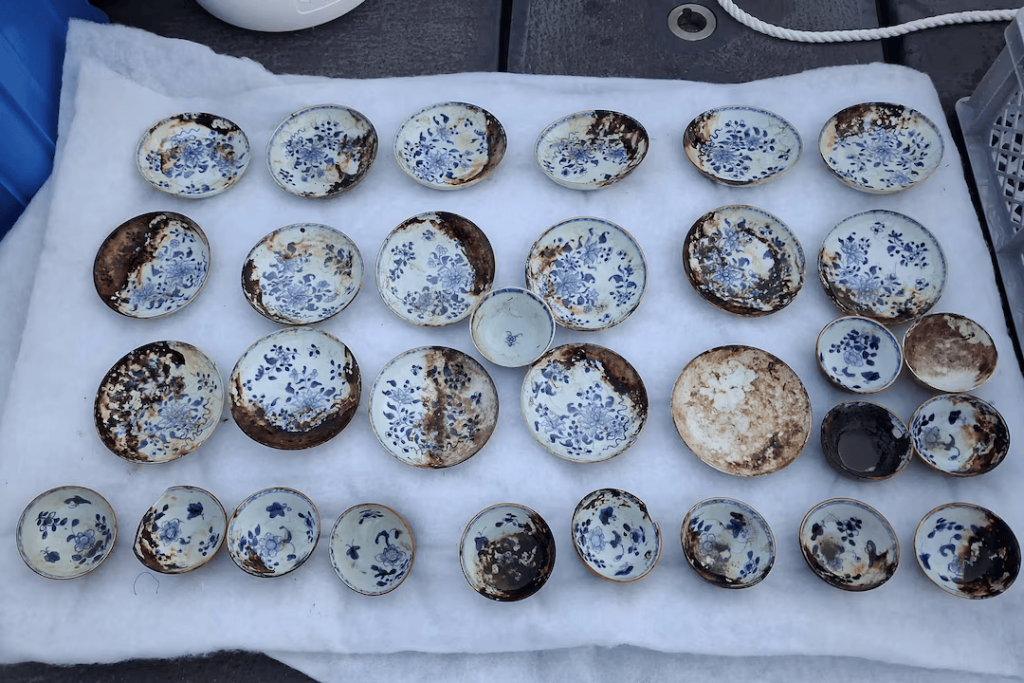
Items that offer a fascinating glimpse into international commerce centuries ago.
The vessel, whose name and identity remain a mystery, is believed to have sunk sometime in the mid-1700s.
Shipwreck Reveals Maritime History
It was discovered by the owner of a salvage company, opening the door to what experts describe as an extraordinary archaeological opportunity.
“This find is not only extraordinary, it’s also of considerable scientific value,” said Norway’s Climate and Environment Minister, Andreas Bjelland Eriksen.
He added that the discovery highlights major advances in underwater archaeology, allowing researchers to explore sites once considered out of reach.
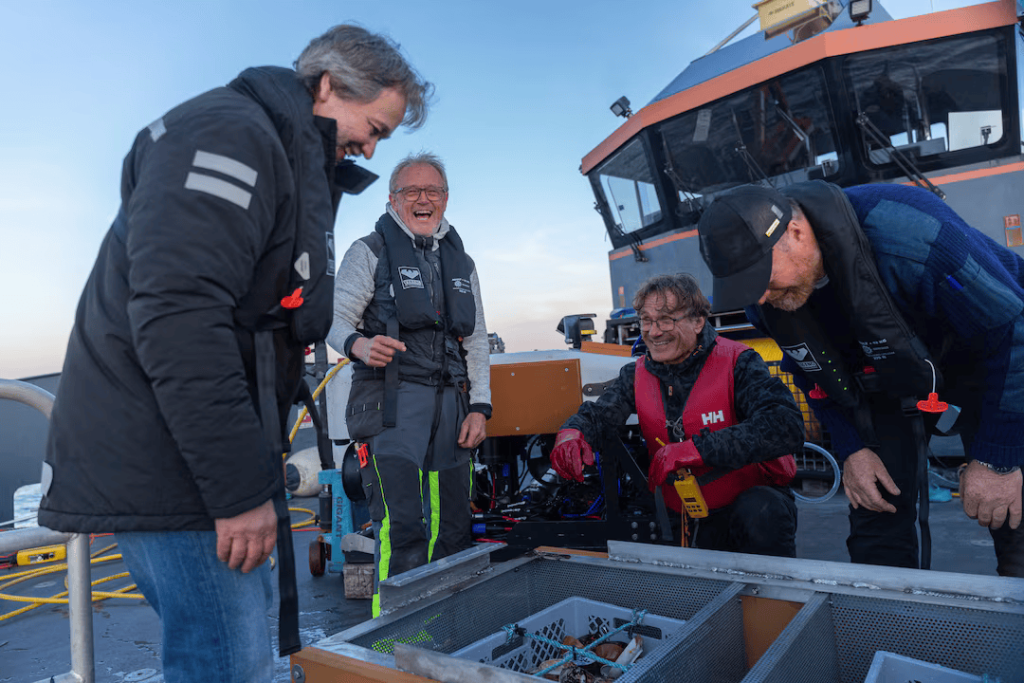
Now comes the detective work. Where was the ship heading? Where did it begin its journey? And how did it end up on the seabed?
For archaeologists, the wreck is more than a collection of objects—it’s a time capsule from an era when goods, cultures, and fortunes crossed oceans.
Sometimes, history doesn’t stay buried forever; it simply waits to be found.