
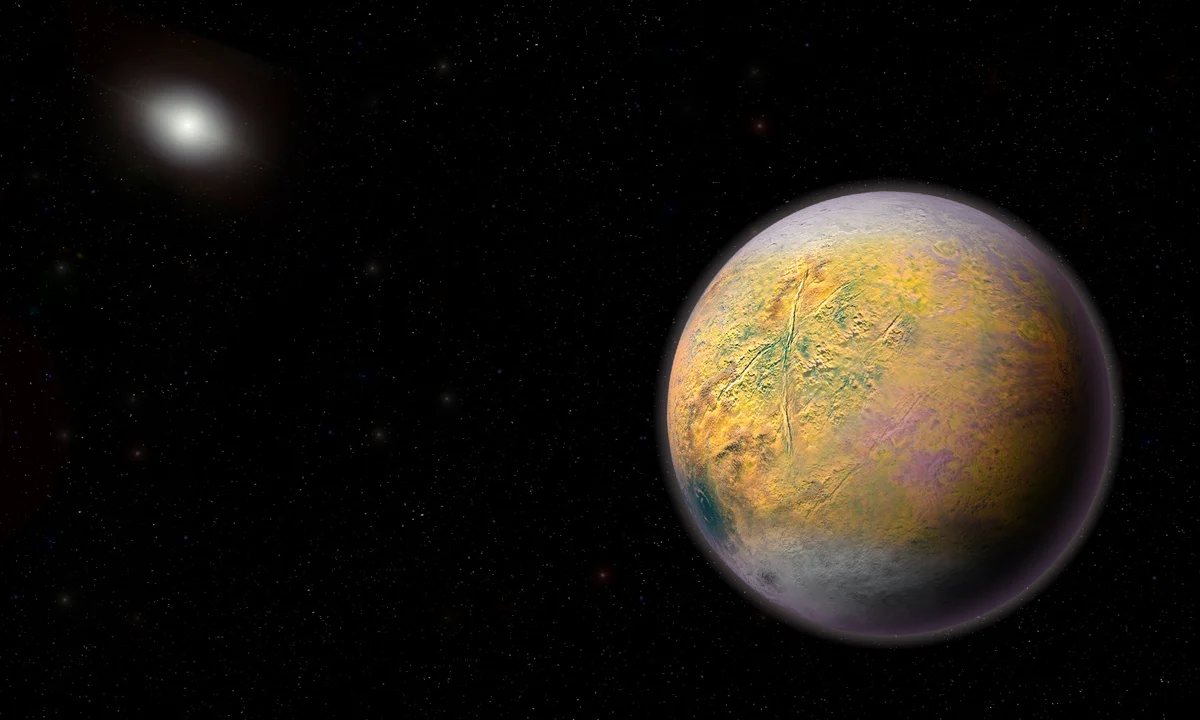
What if the far edge of our Solar System isn’t as silent and frozen as we thought?
Japanese astronomers say a tiny, icy world—2002 XV93—may have something unexpected: an atmosphere.
Yes, an atmosphere… nearly six billion kilometres from the Sun.
Until now, only Pluto held that title among distant objects in the Kuiper Belt.
So how did this small, 500-kilometre-wide rock pull it off?
The clue came in a blink—and a delay. As the object passed in front of a distant star, the light didn’t snap back instantly.
Instead, it faded in slowly. According to lead researcher Ko Arimatsu, that suggests a thin layer of gas filtering the light.
But don’t imagine breathable air. This “atmosphere” is millions of times thinner than Earth’s.
Distant World Surprises
So where did it come from? Scientists have ideas. Maybe icy volcanoes are quietly venting gas.
Or perhaps a comet impact kicked up material that’s slowly drifting away.
Not everyone’s convinced. Astronomer Jose-Luis Ortiz cautions: “We need more data.” It could even be a ring, not an atmosphere.
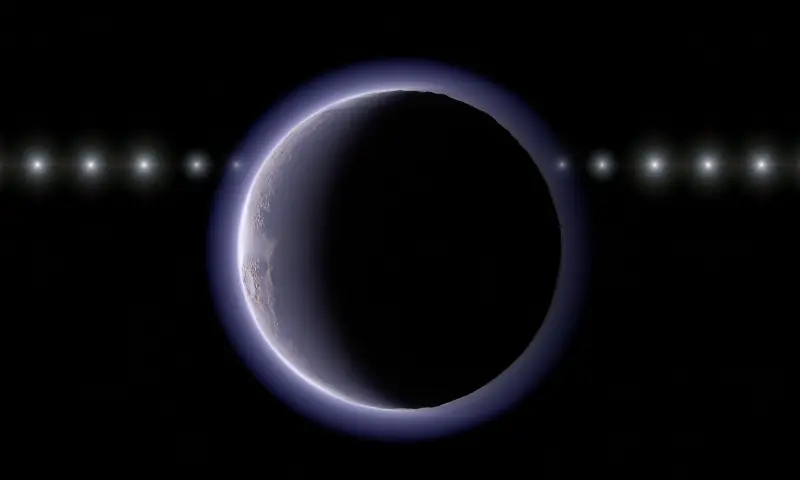
Either way, the discovery shakes old assumptions. These distant worlds? Not so inactive after all.
And here’s the twist—while some debate making Pluto a planet again, space just added another contender to the conversation.