

Ever booked a holiday rental and wondered if it was actually legal?
Spain just sent a loud message to the short-term rental world.
The government has slapped Airbnb with a €64 million (£56m) fine for advertising tens of thousands of unlicensed apartments — and there’s no appeal.
So what happened? Authorities say more than 65,000 Airbnb listings broke consumer rules.
Some properties lacked proper rental licences. Others displayed licence numbers that didn’t match official records.
As a result, Airbnb has been ordered to pull the offending ads. The company has yet to publicly respond.
Why the crackdown now?
Spain’s tourism boom is a double-edged sword. Visitors pour in, prices shoot up, and locals get squeezed out.
“There are thousands of families living on the edge because of housing.
While a few get rich pushing people out of their homes,” said consumer rights minister Pablo Bustinduy.
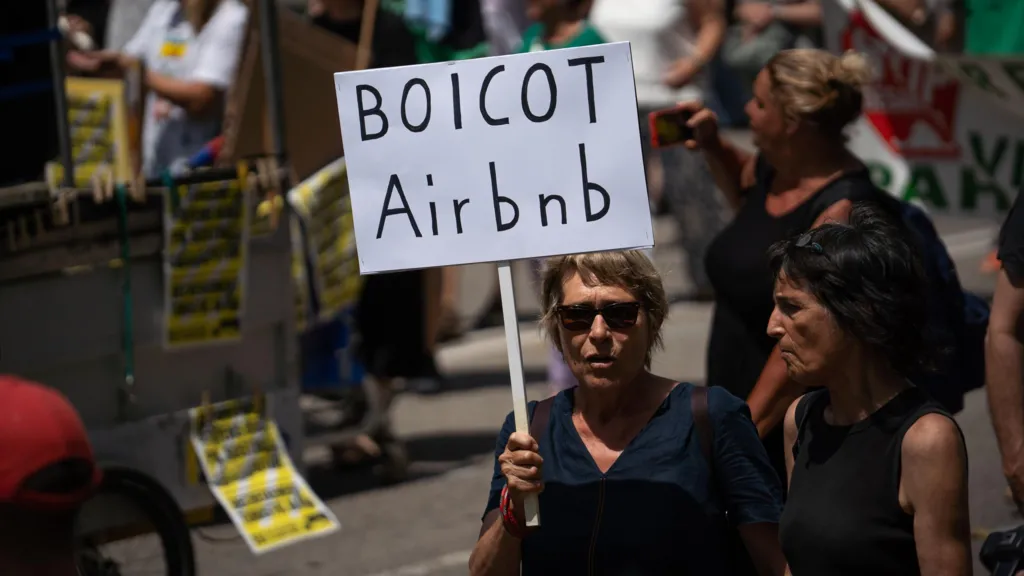
Beyond affordability, officials worry about neighbourhoods hollowed out by a revolving door of tourists.
Protests erupted earlier this year, especially ahead of the summer rush, as frustration boiled over.
Spain isn’t alone. Cities like Barcelona, New York, Paris and Berlin have all tightened the screws on short-term lets.
Once seen as a friendly way to earn extra cash, platforms like Airbnb are now facing a tougher question.
Convenience for travellers — but at what cost to residents?
As Bustinduy put it bluntly, “No company, no matter how powerful, is above the law.” And for Airbnb in Spain, the holiday is clearly over.