
Thousands of protesters flooded Brussels on Friday to oppose government budget cuts.
But what began as a nationwide strike turned violent in parts of the Belgian capital.
Union members and hundreds of students joined the march, which disrupted public transport, air travel, schools and childcare services.
While the main demonstration of around 30,000 people remained peaceful.
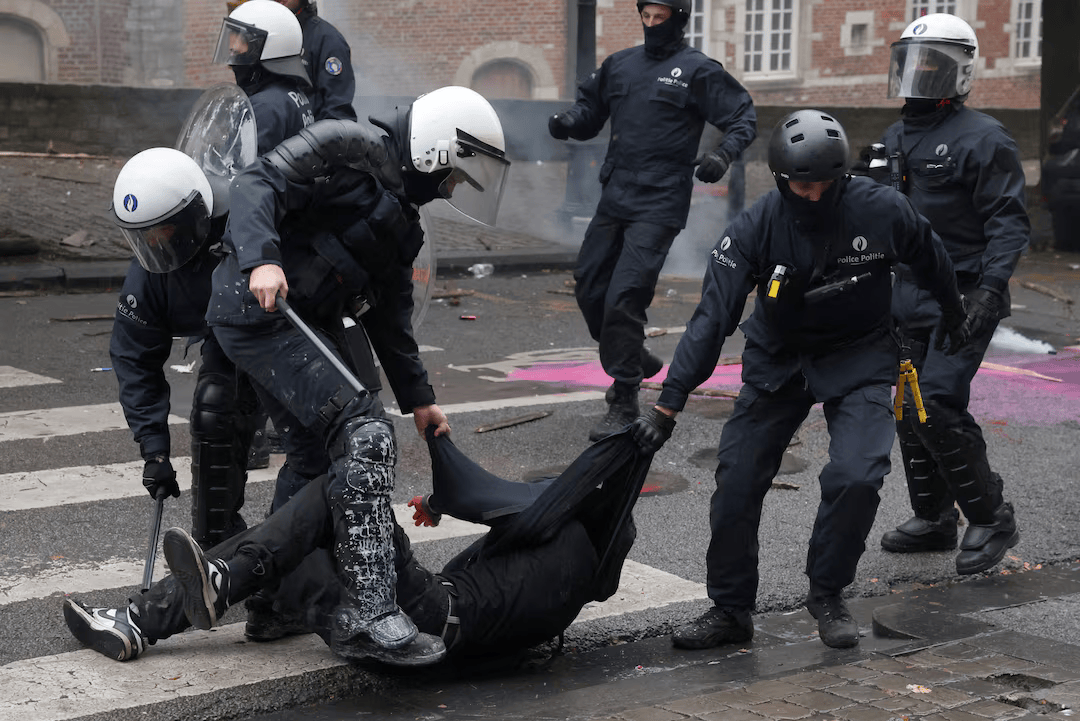
Clashes erupted near Brussels Central Station and elsewhere in the city.
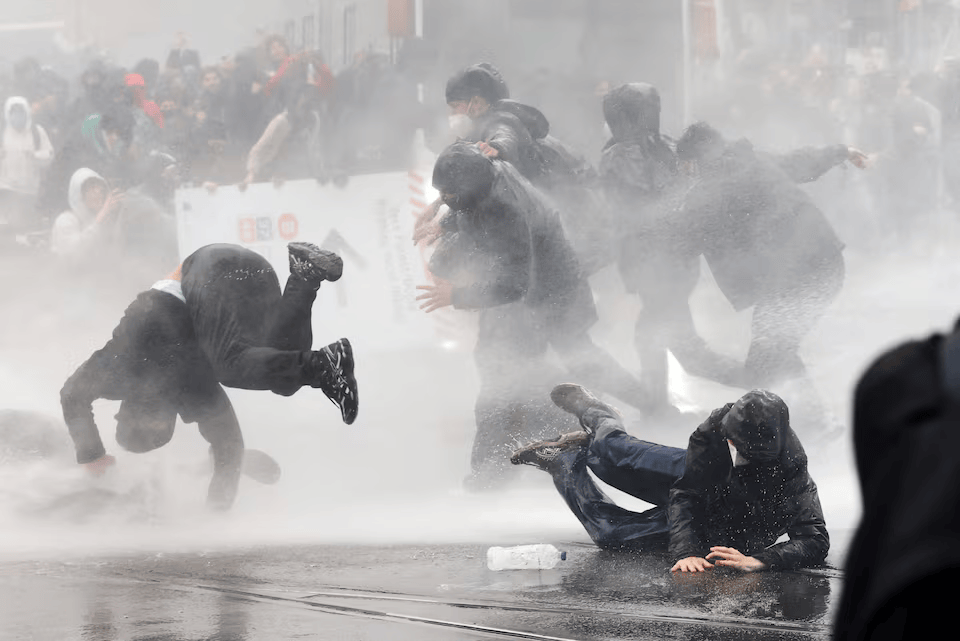
Masked protesters threw rocks, bricks and fireworks at police, set fires and damaged public property.
Officers responded with tear gas and water cannon. Police said 21 people were detained or arrested, including 13 minors.
Why Are People Taking To The Streets?
Belgium’s two largest unions argue that the government’s budget measures unfairly shift the burden of reducing the national deficit.
The burden falls onto workers, pensioners and low-income families.
Prime Minister Bart De Wever, however, says painful cuts are necessary to prevent rising debt and interest costs from burdening future generations.
Students have their own concerns: rising education costs, overcrowded classrooms.
They fear reforms could make higher education harder to access.
Inspired partly by protests in neighbouring France, they joined the wider movement.
“We’re struggling too, and we are the future of this country,” said 23-year-old student Emilie L’Honneux.
With governments focused on balancing budgets and citizens worried about making ends meet.
One question remains: who should pay the price for fixing the economy?