

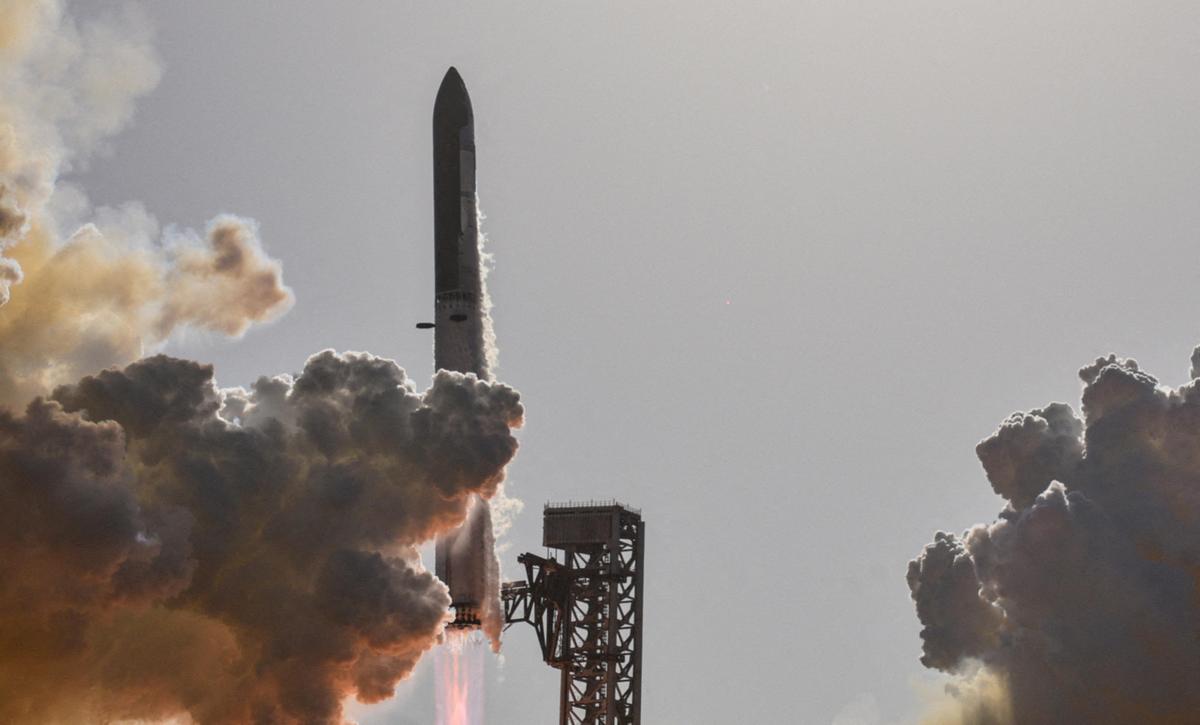
What happens when a four-tonne rocket stage runs out of road in space?
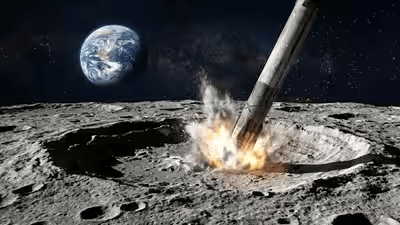
In this case, scientists believe it ended its journey by crashing into the Moon.
A SpaceX Falcon 9 upper stage was expected to slam into the lunar surface at around 8,690 km/h, likely creating a fresh crater near the Moon’s Einstein Crater.
While NASA has not yet officially confirmed the impact.
Spacecraft from both NASA and South Korea are preparing to capture images of the site in the coming days.
NASA has not yet officially confirmed the impact.
The collision poses no threat to Earth, but it offers researchers a rare chance to watch a real-life impact unfold.
NASA Tracks Collision
Benjamin Fernando of Los Alamos National Laboratory explained.
“It might be possible for folks with a telescope to observe the plume of ejecta created by the impact.”
He added that scientists are eager to learn just how bright the cloud of debris will be.
The rocket stage dates back to a January 2025 SpaceX mission that launched two lunar landers.
While the booster returned to Earth, the upper stage remained in space after completing its job.
NASA says it will continue tracking the object and closely examine the impact site for scientific research.
Even in space, it seems, every mission leaves a mark—sometimes quite literally.