What happens when a football match turns into a question of safety and freedom?
For five members of Iran’s women’s national team, the answer has been life-changing.
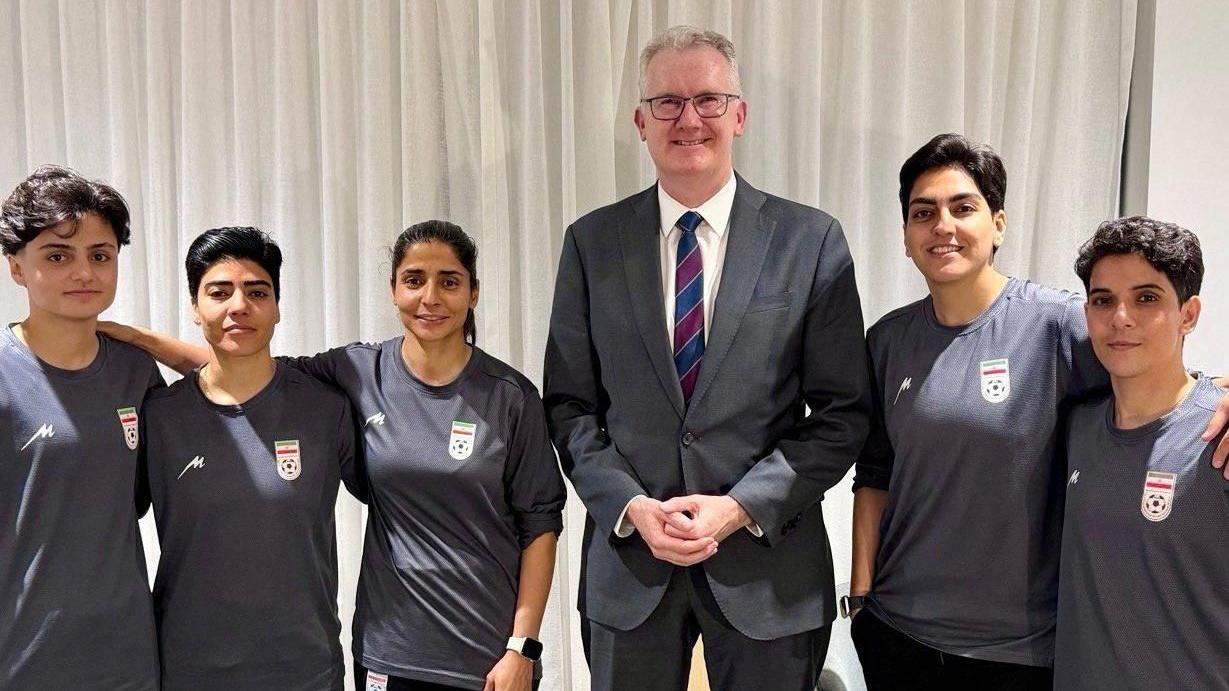
After their exit from the AFC Women’s Asian Cup, five Iranian players were granted humanitarian visas by Australia, allowing them to stay permanently.
The decision followed growing fears about what might happen if they returned home.
After refusing to sing the national anthem before a match against South Korea.
Australian Immigration Minister Tony Burke confirmed the players—Fatemeh Pasandideh, Zahra Ghanbari, Zahra Sarbali, Atefeh Ramazanzadeh and Mona Hamoudi—had been moved to a safe location by police.
“They want to be clear they are not political activists,” Burke said. “They are athletes who want to be safe.”
The anthem protest sparked backlash in Iran, where critics accused the players of betraying the country during wartime.
Players Seek Asylum
Supporters in Australia responded dramatically—hundreds surrounded the team bus chanting “save our girls.”
Even Donald Trump weighed in online, urging Australia to grant the women asylum.
Human rights advocates say the stakes are serious.

Former Australian football captain Craig Foster warned players may fear retaliation against families back home.
For now, five players have found refuge. The rest must decide: return home—or start a new life abroad.
Either way, it’s a choice no athlete expects to face after a football match.