
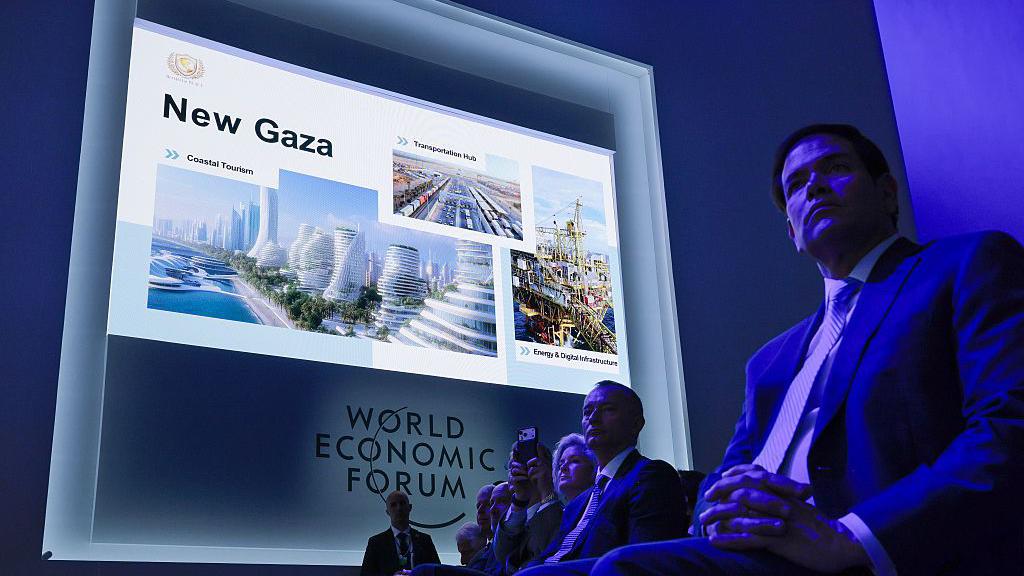
What would it look like to rebuild Gaza from the ground up — not patch it, but reinvent it entirely?
That’s the bold question behind the US plan for a so-called “New Gaza,” unveiled at the World Economic Forum in Davos.
Think glassy skyscrapers along the Mediterranean, new housing hubs in Rafah, tech zones, ports, parks — even coastal tourism.
Ambitious? Absolutely. Controversial? Without a doubt.
US President Donald Trump framed it in his trademark style.
“I’m a real estate person at heart,” he said, calling Gaza’s seaside location “beautiful property” with massive potential.
His newly formed Board of Peace, launched at Davos, would oversee both ending the Israel-Hamas war and rebuilding the enclave.
Rebuilding Gaza’s Dilemma
Insiders say the scale is staggering. Jared Kushner, who helped broker the ceasefire, noted that around 90,000 tonnes of munitions were dropped on Gaza.
Leaving 60 million tonnes of rubble. “We decided to plan for catastrophic success,” he said bluntly. No Plan B.
The blueprint divides reconstruction into phases, starting in Rafah and moving north.
A new airport, seaport, industrial hubs — even data centres — are on the map.
But there’s a catch: demilitarisation. “Without security, nobody invests,” Kushner stressed.
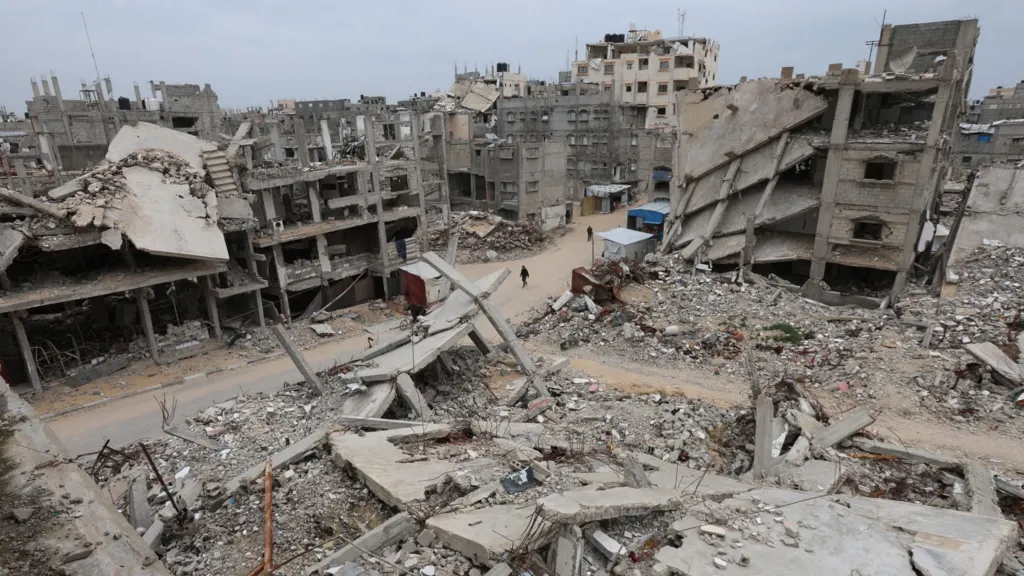
Critics point to the reality on the ground. Over 80% of Gaza’s buildings are damaged or destroyed.
Humanitarian needs remain dire, and the ceasefire is fragile.
So is this a blueprint for hope — or another grand plan colliding with hard truths?
Gaza, it seems, stands at a crossroads between vision and reality.