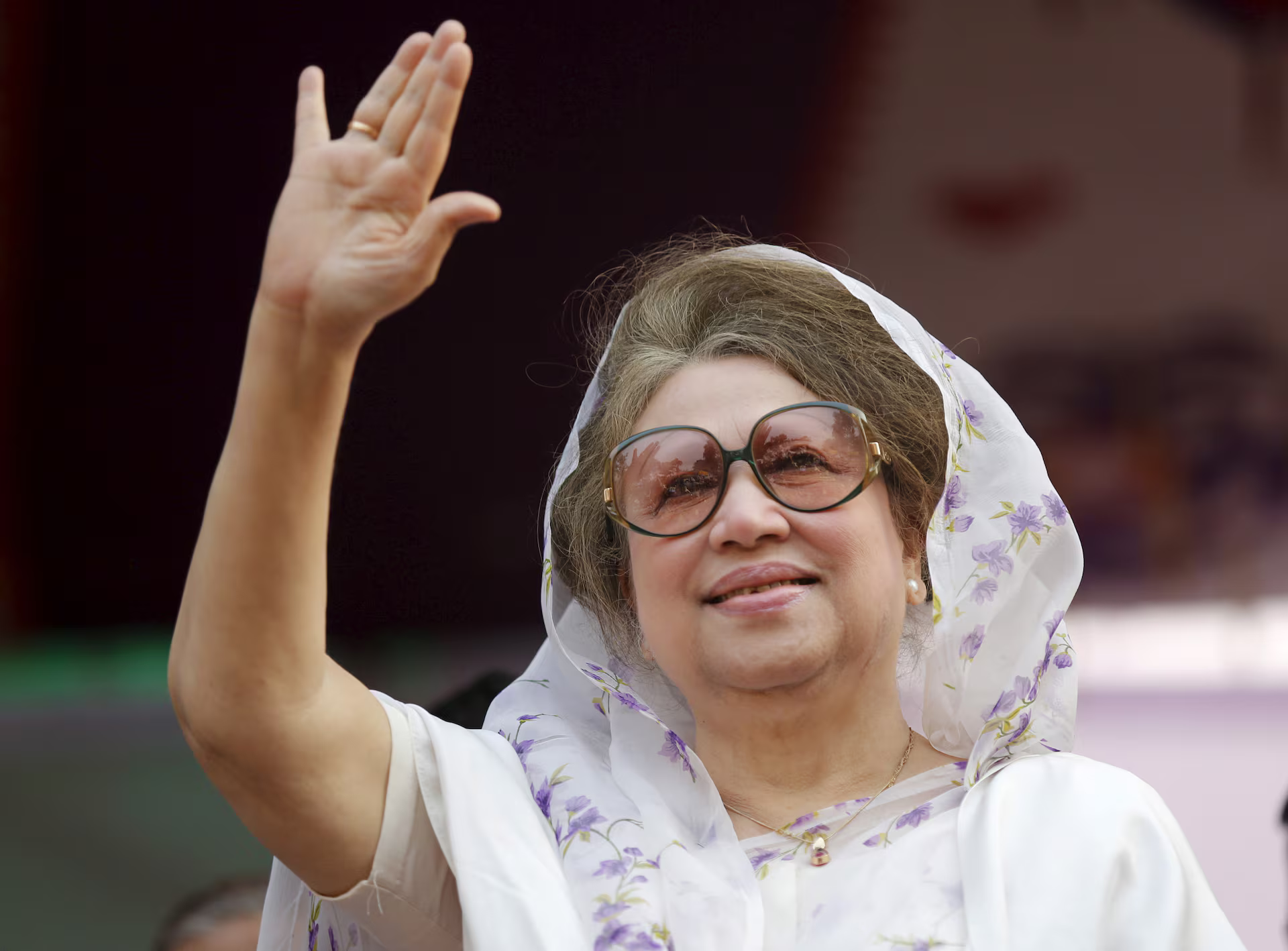
Bangladesh has lost one of its most towering—and polarising—political figures.
Khaleda Zia, the country’s first female prime minister and a long-time rival of Sheikh Hasina, has died at the age of 80 after a prolonged illness.
Her death comes at a pivotal moment. Zia had planned a political comeback, hoping to run for a third term in elections due in February.
These will be the first since last year’s popular uprising that forced Hasina from power. Fate, however, had other plans.
Doctors described her condition as “extremely critical” in her final hours.
Despite being placed on life support, they said her age and frail health limited treatment options.
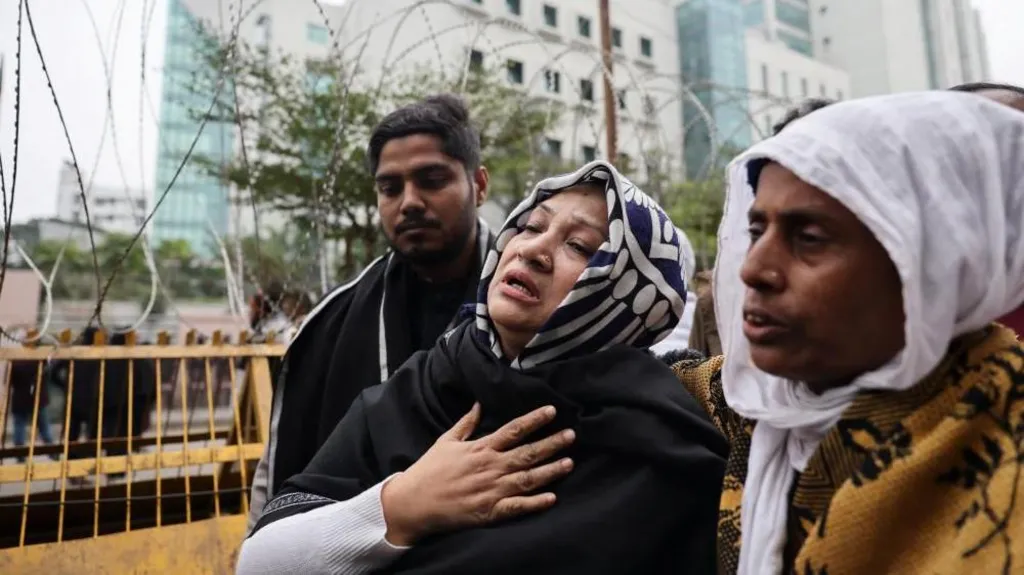
“Our favourite leader is no longer with us,” her party, the BNP, announced, as supporters gathered outside a Dhaka hospital in mourning.
A Divisive Legacy
Zia’s journey to power began with tragedy—the assassination of her husband, President Ziaur Rahman, in 1981.
From there, she stepped into a male-dominated arena and rewrote Bangladesh’s political script, becoming prime minister in 1991.
Her first term earned praise for restoring parliamentary democracy and advancing women’s education.
But her career was anything but smooth. Prison, house arrest, and corruption cases she called politically motivated defined her later years.
A bitter rivalry with Hasina also defined her later years.
Still, to supporters, she remained a symbol of resistance.
As interim leader Muhammad Yunus put it, Zia was a “symbol of the democratic movement.”
In a country shaped by fierce political duels, her legacy leaves one lingering question: who now fills the space she leaves behind?