
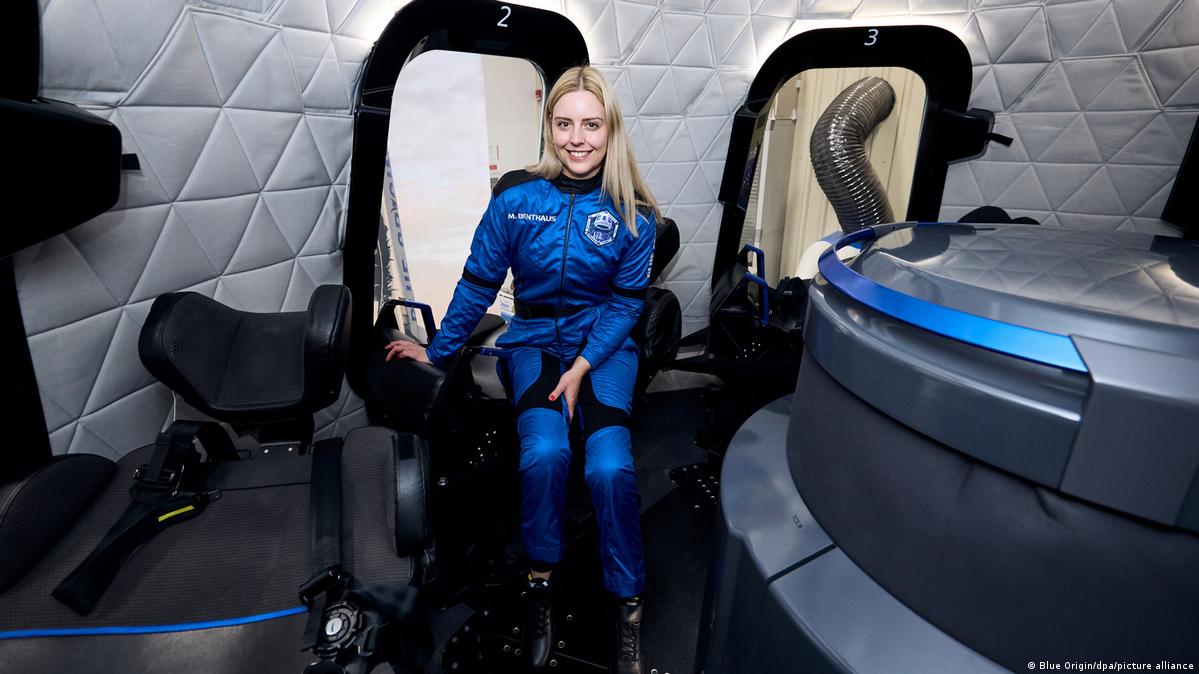
What if being told “it’s impossible” just made you aim higher — literally?
For Michaela Benthaus, a German engineer and wheelchair user, that question ended 100 kilometres above Earth.
Seven years after a mountain bike accident left her with a spinal cord injury, Benthaus refused to shelve her childhood dream of space.
Instead, she sent a simple message to a retired space engineer: Is this still possible for someone like me? The answer turned into history.
On Saturday, Benthaus became the world’s first wheelchair user to fly into space, blasting off from Texas aboard Blue Origin’s New Shepard rocket.
Historic Inclusive Spaceflight
The 10-minute suborbital flight carried her and five others just past the Kármán line — often called the edge of space.
“It was the coolest experience,” she said afterward, grinning. “Not just the view or the microgravity — even the ride up was incredible.”
Benthaus, who works at the European Space Agency, entered the capsule independently using adapted equipment.
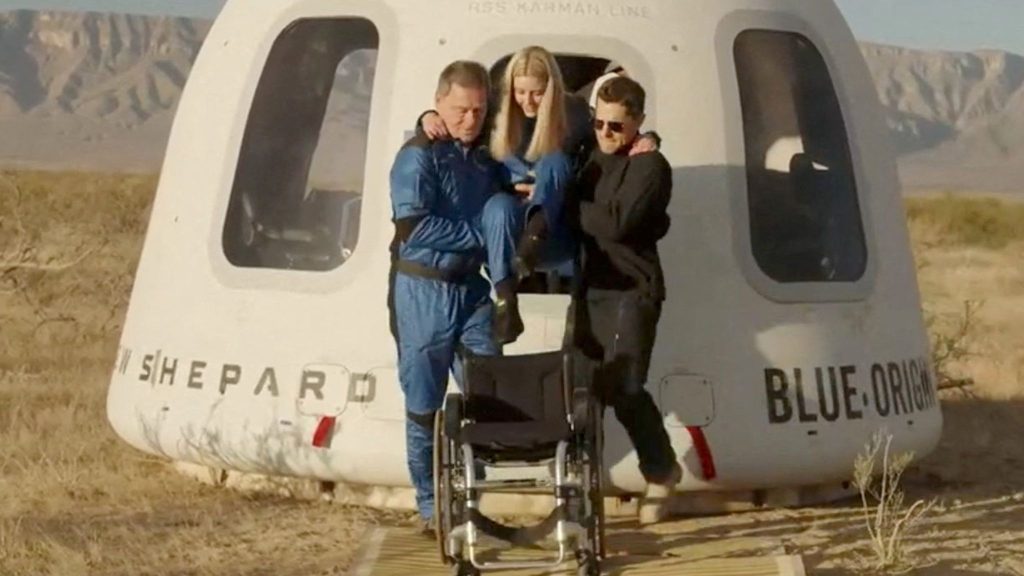
Hans Koenigsmann, a former SpaceX executive who helped organise the flight, said her determination sealed it.
“Her drive convinced me this had to happen.”
Blue Origin’s Phil Joyce called the mission a message: “Space is for everyone.”
And maybe that’s the real lift-off moment — not the rocket, but the idea that the stars aren’t reserved for a select few anymore.