What happens when Washington turns up the volume in one of Asia’s most sensitive flashpoints? Beijing notices — loudly.
The Trump administration has unveiled an arms package for Taiwan worth roughly $11bn.
It is packed with heavy hitters: HIMARS rocket systems, self-propelled howitzers, and a range of missiles.
Congress still needs to sign off, but if approved, it would mark the second major weapons sale to Taipei since Donald Trump returned to the White House.
Taiwan welcomed the move, saying it would help build “robust deterrence capabilities.”
China, unsurprisingly, was furious. The deal “severely undermines China’s sovereignty and security,” Beijing said.
It warned that using Taiwan to “contain China” would only fuel instability across the Taiwan Strait.
The backdrop matters. The US officially recognises Beijing, not Taipei — yet remains Taiwan’s most important military backer.
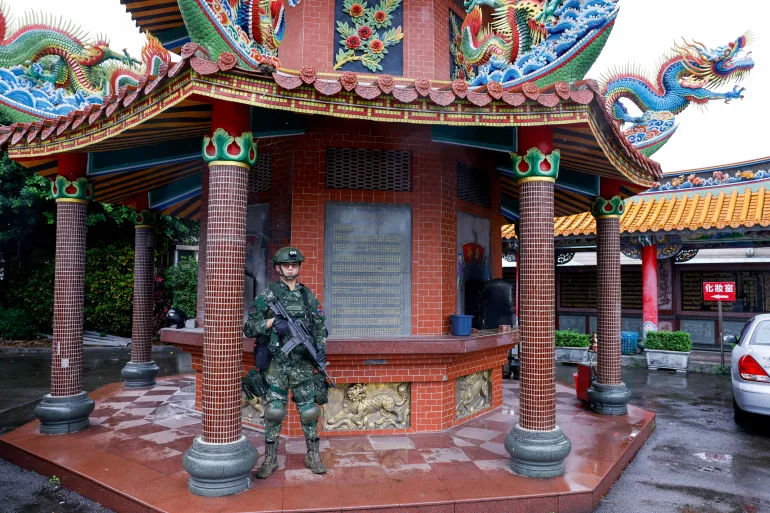
Taiwan Boosts Defences
As Chinese jets and warships increasingly circle the island, Taiwan is racing to modernise its defences.
“This supports Taipei’s efforts to maintain a credible defensive capability,” the US State Department said.
The scale is striking. At $11bn, the package would eclipse all arms sales approved under Joe Biden combined.
Taiwan plans to spend over 3% of GDP on defence next year, rising to 5% by 2030.
The message is clear. Deterrence, not provocation — or at least, that’s the argument.
In the Taiwan Strait, every weapons deal is more than hardware. It’s a signal.