
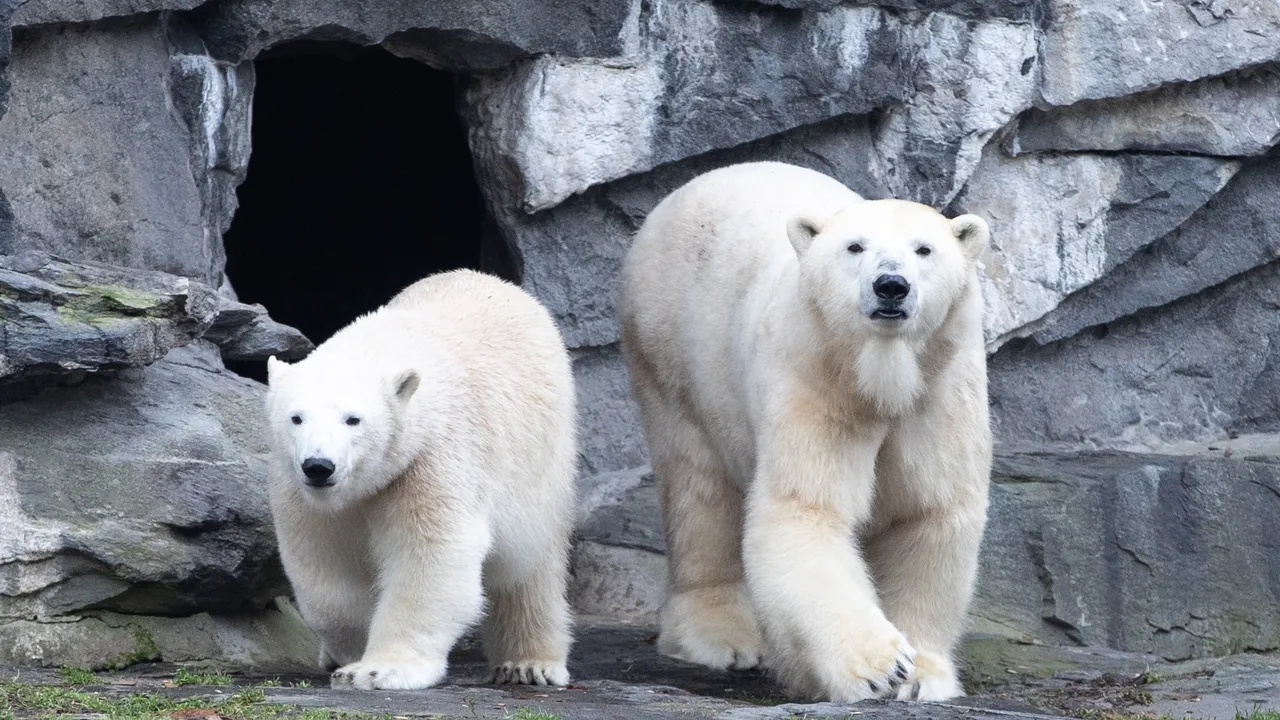
Could polar bears be rewriting their own DNA to survive a warming world?
Scientists from the University of East Anglia say yes — and the discovery could change how we understand adaptation in the wild.
Climate change is pushing polar bears to the brink.
With two-thirds expected to vanish by 2050 as ice melts, survival is urgent.
Researchers studied polar bears in south-east Greenland.
They compared their “jumping genes” — tiny mobile pieces of DNA that can switch other genes on or off — to local temperatures.
The result? Bears in warmer regions showed dramatic genetic shifts, particularly in genes tied to heat stress, metabolism, and ageing.
“By comparing these bears’ active genes to climate data, we found rising temperatures appear to be driving a dramatic increase in jumping gene activity. ”
“Explained lead researcher Dr Alice Godden.”
Polar Bears Adapt
These genetic tweaks may help bears process different diets, cope with scarce food, and survive hotter, iceless conditions.
The south-east Greenland bears, facing the steepest temperature swings, displayed more changes than northern populations.

Godden described it as “a desperate survival mechanism against melting sea ice,” a glimpse into evolution in real time.
While the findings offer hope, Godden warns: “This does not mean polar bears are safe.
We still need to cut carbon emissions and slow temperature rises.”
So yes, nature may be cleverer than we give it credit for — but even the smartest survival hacks can’t outrun climate change alone.