

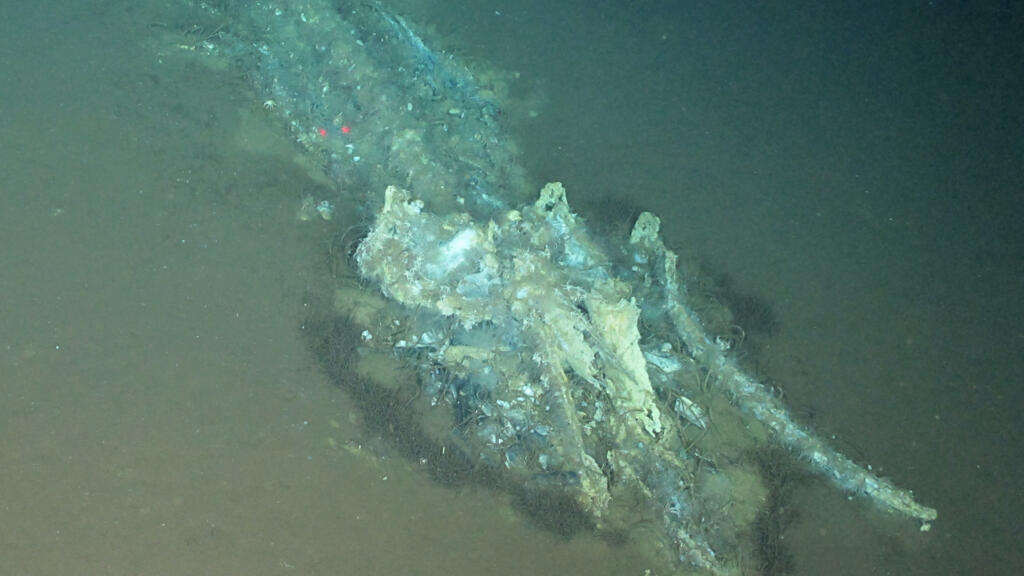
What if one of the greatest wildlife discoveries on Earth wasn’t found on land—but nearly seven kilometres beneath the ocean’s surface?
Chinese scientists have uncovered what is believed to be the world’s largest whale graveyard deep in the Indian Ocean.
Revealing an underwater “city of the dead” that has been sustaining life for millions of years.
The discovery includes almost 500 whale skeletons scattered along a 1,200-kilometre corridor west of Australia.
Some of the fossils date back an astonishing 5.3 million years, making it the oldest and deepest known whale graveyard ever found.
Researchers aboard the Fendouzhe submersible were stunned by what they saw.
“We were astonished,” said lead scientist Xiaotong Peng, explaining that the scale, depth, and age of the site far exceeded expectations.
Graveyard Reveals New Species
But this wasn’t just a collection of bones. The carcasses were teeming with life.
Strange deep-sea creatures—many potentially new to science—were found feeding on the remains.
Scientists even identified a previously unknown species of whale among the skeletons.
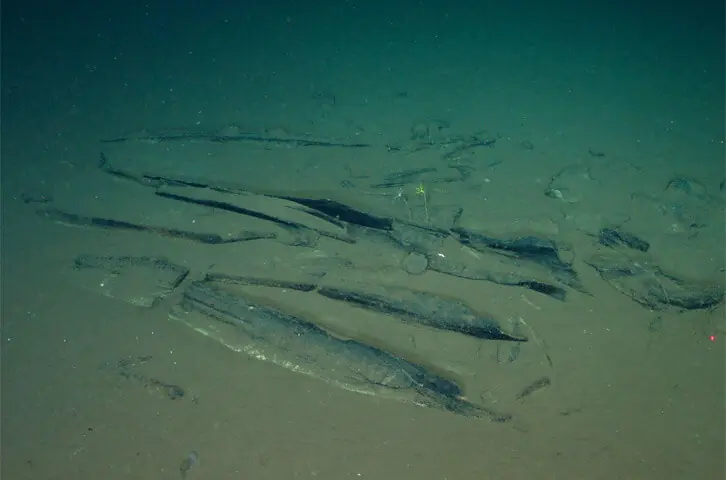
Experts believe the area became a whale hotspot because it served as a rich feeding ground.
A V-shaped underwater trench acted like a giant funnel, guiding carcasses to the ocean floor.
It’s a reminder that even in death, whales continue to shape ecosystems.
Deep beneath the waves, an ancient graveyard has become an unlikely cradle of life.