Can a single handshake ease years of tension?
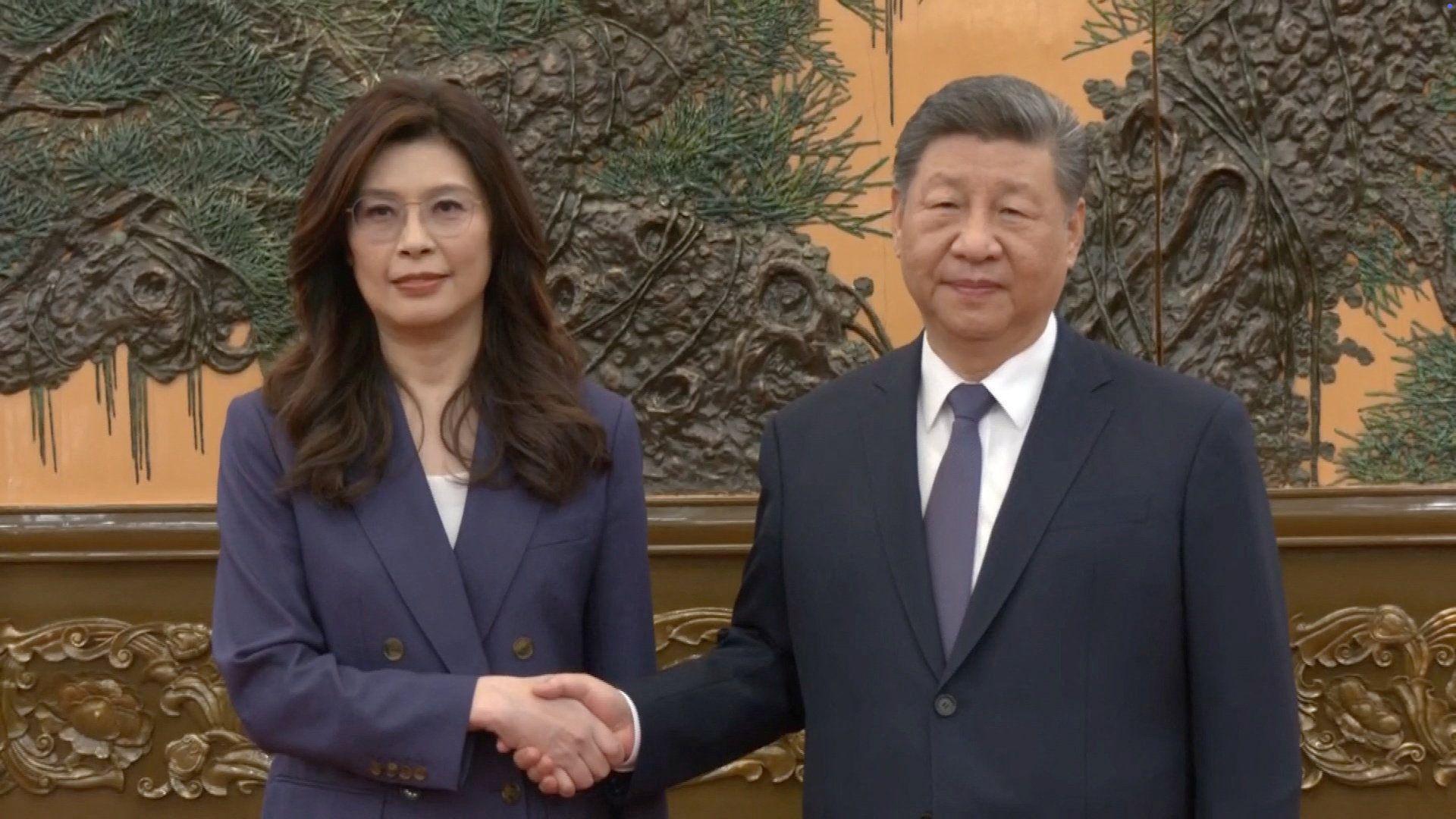
That’s the question after Xi Jinping met Taiwan’s opposition leader Cheng Li-wun in a rare, closely watched encounter.
It’s the first time in a decade that a sitting leader of the Kuomintang has visited China—a move that’s already stirring debate back home.
Supporters call it diplomacy. Critics, especially from the ruling Democratic Progressive Party, call it “subservience.”
So what was said behind those grand doors in Beijing’s Great Hall of the People? Xi struck a familiar tone: peace, stability, and “a shared future”—but with a condition.
Dialogue, yes… as long as Taiwan opposes independence.
Cross-Strait Optics Matter
Cheng echoed the message, framing cooperation as a path to “avoid war and create peace.”
She leaned on the long-debated “1992 Consensus”—a vague agreement that both sides belong to “one China.”
Though they disagree on what that actually means.
But here’s the catch: Taiwan itself is divided. Many people want peace—but not at the cost of sovereignty.
And Beijing? It still hasn’t ruled out using force.
Analysts say this meeting is as much about optics as outcomes. A show of goodwill… or a strategic play?
Because in cross-strait politics, even a smile can carry weight—and sometimes, more questions than answers.