
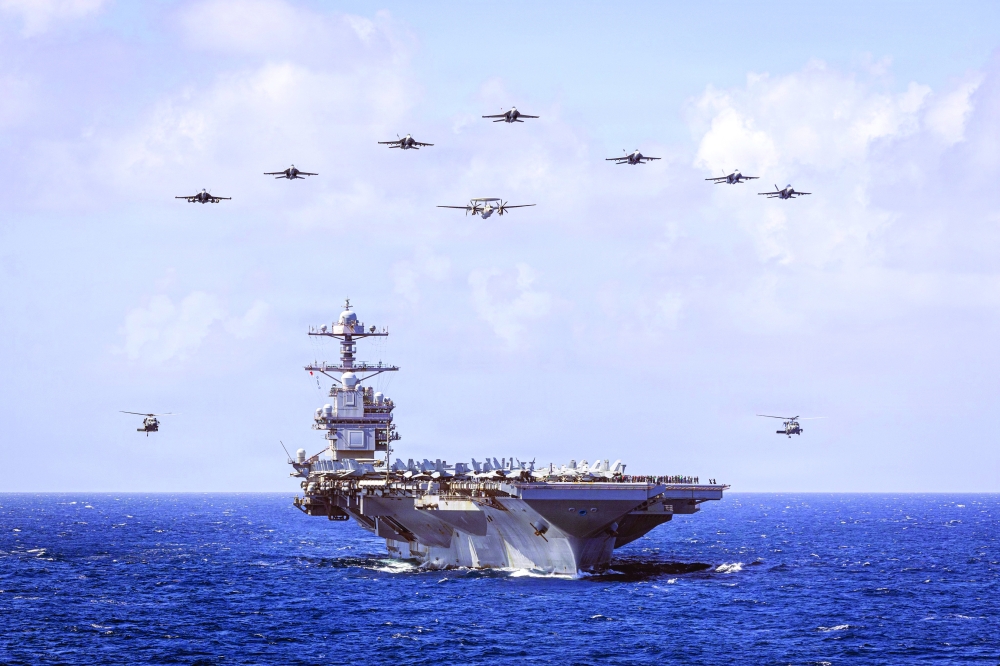
Donald Trump has ordered the USS Gerald R Ford — the world’s largest aircraft carrier — to leave the Caribbean and head for the Middle East.
In about three weeks, it will join the USS Abraham Lincoln, doubling America’s floating firepower near Iran.
Why now? Talks are simmering. The US and Iran recently held indirect negotiations in Oman over Tehran’s nuclear and missile programmes.
Trump says a deal should happen “very quickly” — within a month. But he’s also warned that failure would be “very traumatic.”
That mixed messaging has defined the past few weeks. At one point, Trump hinted at supporting Iranian protesters.
Now, his focus seems squarely on curbing Iran’s nuclear ambitions — ambitions already dented by last summer’s joint US-Israeli airstrikes.
Naval Diplomacy Unfolds
Iran says it’s open to limiting uranium enrichment for sanctions relief.
But rejects demands to scale back missiles or support for proxy groups. Israel, meanwhile, wants tougher concessions.
The Ford’s deployment is unusually long; it left the US in June 2025 and still has no return date.
So is this a prelude to peace — or pressure diplomacy at sea?
In geopolitics, sometimes negotiations happen at the table. And sometimes they arrive on the deck of a carrier.