

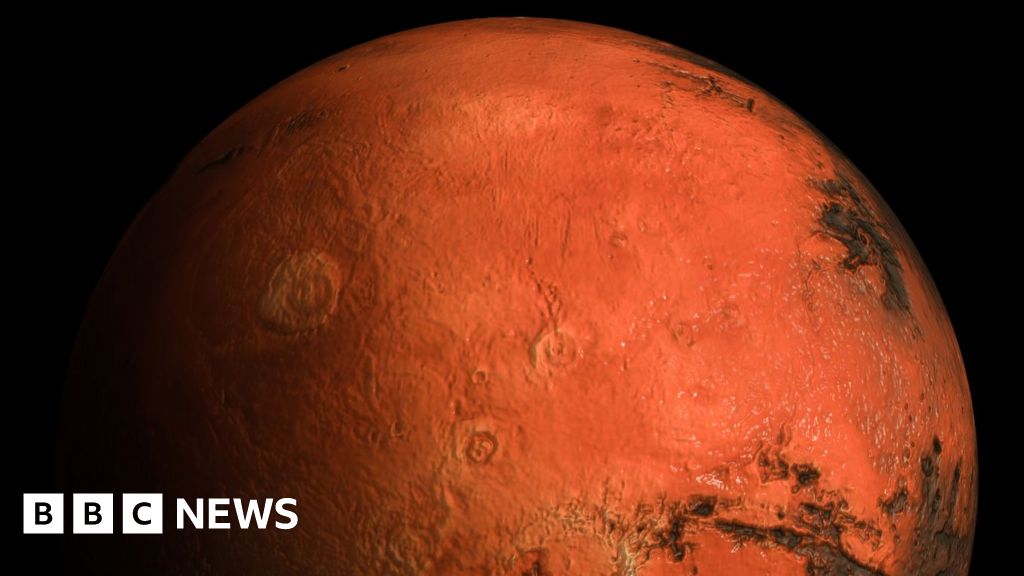
Could Mars have lightning? For the first time, scientists think they’ve recorded electrical activity in the Red Planet’s atmosphere.
Tiny flashes are nicknamed “mini lightning.”
Nasa’s Perseverance rover has been exploring Jezero Crater since 2021.
It picked up the signals using its SuperCam instrument, capturing both audio and electromagnetic data.
French researchers analyzed 28 hours of recordings spanning two Martian years.
They found these sparks usually appeared alongside dust devils and storm fronts.
Dust devils — those swirling mini-tornadoes of hot air — seem to generate enough friction to create tiny electrical discharges.
Dr Baptiste Chide, lead author of the study, called the discovery “a major breakthrough.”
He said it has “direct implications for Martian atmospheric chemistry, climate, habitability, and the future of robotic and human exploration.”
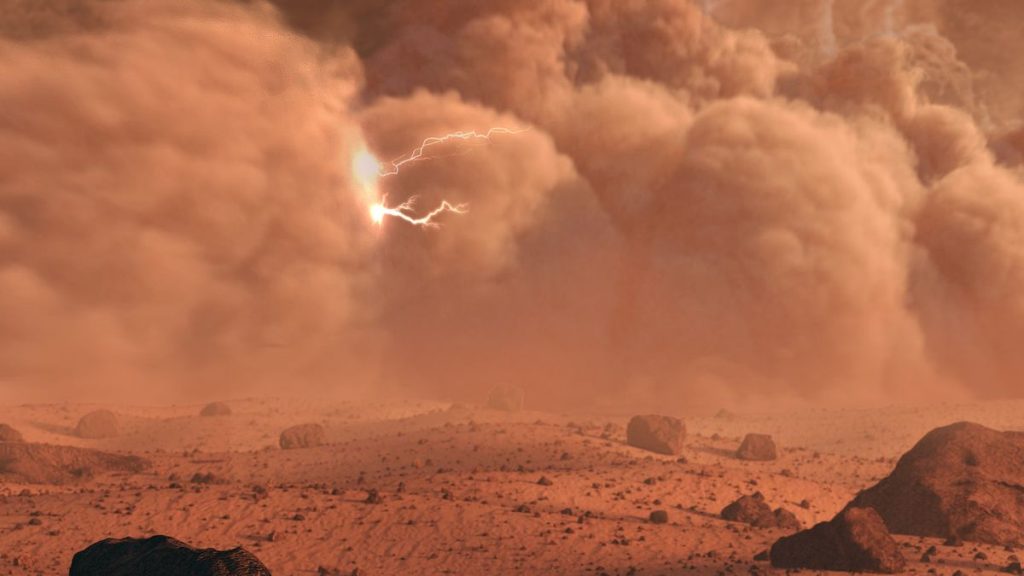
Possible Martian Lightning
Particle physicist Dr Daniel Pritchard, writing in Nature, cautioned that because the discharges were heard but not visually observed.
“Some doubt will inevitably remain as to whether this really was Martian lightning.”
If confirmed, Mars would join Earth, Jupiter, and Saturn as planets with atmospheric electrical activity.
And this isn’t the first tantalizing hint that Mars has secrets to tell.
In September, researchers spotted rocks with strange mineral patterns — “leopard spots” and “poppy seeds” — that could be signs of ancient
So, as Perseverance rolls across dusty plains, one question lingers: could Mars’ tiny sparks light the way to understanding life beyond Earth?